Visualizzazione post con etichetta progressive metal. Mostra tutti i post

giovedì 10 dicembre 2020

Cynic - Focus


Cynic - Focus
(Roadrunner Records, 1993)

In Florida, all'inizio degli anni '90, nel bel mezzo dell'esplosione del death metal, una band di ragazzini provò a scomporre il death metal e a ricostituirlo in un'entità liquida e mutevole. Chuck Schuldiner rimase affascinato da questi ragazzi e decise di coinvolgere due di loro nella costruzione di Human, capolavoro del progressive death metal. Poi, nel 1993, i Cynic pubblicarono il loro album d'esordio, un incredibile balzo in avanti per l'intera scena metal, ovviamente rimasto incompreso a quell'epoca. Focus è un album progressive rock nella sua più genuina essenza. Oltre ogni convenzione, Focus esplora dimensioni spirituali con originalità, sia dal punto di vista della musica sia dal punto di vista dei testi. La struttura delle canzoni è contorta e cerebrale, le melodie fluide e emozionanti, gli assoli incredibili, con il loro gusto jazz fusion. La musica frattale dei King Crimson è qui rinata in forma metal.
[R.T.]

***

Cynic - Focus
(Roadrunner Records, 1993)

In Florida, at the beginning of the 90s, in the middle of death metal explosion, a teenage band tried to deconstruct death metal and to reform it in a liquid  and changing entity.  Chuck Schuldiner was fascinated by these guys, and he decided to involve two of them in the construction of Human, a masterpiece of progressive death metal. Then, in 1993, Cynic published their debut album, an incredible step forward for the entire metal scene, obviously misunderstood at that time.  Focus is a progressive rock album, in its most genuine exence. Beyond every convention, Focus explores spiritual dimensions with originality, both in lyrical and in musical aspects. Songs structure is cerebral and twisted, melodies are fluid and emotional, and solos are amazing, with their jazz fusion taste. King Crimson’s fractal music was here reborn in a metal form. 

[R.T.]

lunedì 11 marzo 2019

The Blank Canvas – Vantablack


The Blank Canvas – Vantablack
(Drown Within Records, 2018)

Una tela nera. O, meglio, uno schermo che proietta ossessivamente le stesse immagini. Istantanee fotografiche che si inseguono secondo traiettorie geometriche, come in un labirinto di specchi. I fotogrammi che compongono il video sono riff spigolosi che si incastrano tra loro, in costante movimento, fino ad apparire curvi e rotondeggianti. In questo intreccio straniante brilla la superficie nera metallizzata delle melodie, lucidissime e riflettenti. Mi impegno per non rimanere risucchiato nel vortice visivo, e mi accorgo che questo schermo si trova nel bel mezzo della pista da ballo di un locale di inizio anni 2000, dove si alternano darkwave e progressive metal. Ma l’assenza di qualsiasi eccesso romantico, da una parte, e di ipertecnicismo, dall’altra, mi fa capire che il nuovo millennio è iniziato da un pezzo. Le due anime sono finalmente fuse alla perfezione, senza alcuna caduta di stile (nessuno ha le New Rocks ai piedi), secondo la lezione di band come i Leprous (d’altra parte l’anima dei Blank Canvas proviene dal math rock spaziale dei Karl Marx was a Broker). Non resta che prendere un bel cocktail fluorescente e gettarsi in pista.
[R.T.]
*** 

The Blank Canvas – Vantablack
(Drown Within Records, 2018)

A black canvas. Or, better, a screen that obsessively projects the same images. Photographic snapshots that follow each other according to geometric trajectories, like in a labyrinth of mirrors. The frames composing the video are angular riffs that fit together, constantly moving, until appearing curved and roundish. In this alienating interweaving sparkles the metallized black surface of the melodies, extremely shiny and reflecting. I try not to get sucked into the visual vortex, and I realize that this screen is in the middle of the dance floor of an early 2000s club, where darkwave and progressive metal alternate. But the absence of any romantic excess, on the one hand, and of technical rigidity, on the other one, makes me understand that the new millennium has begun long time ago. The two souls are finally merged to perfection, without any faux pas (no one is wearing New Rocks), according to the lesson of bands like Leprous (after all Blank Canvas soul comes from Karl Marx was a Broker space math rock). You just have to take a nice fluo cocktail and throw yourself on the dance floor.
[R.T.]

sabato 24 novembre 2018

Marnero + Nero di Marte + Zambra – 10.11.2018 – Il Contro (Prato)


Marnero + Nero di Marte + Zambra – 10.11.2018 – Il Contro (Prato)

Il nero sta bene in ogni occasione. Elegante e mai superfluo, aiuta anche a snellire la figura. Stasera ne abbiamo in abbondanza, perché non c’è abbinamento migliore, per il (Mar)nero, che altro Nero (di Marte) - ma in passato ho assistito anche ad un ottimo accostamento con i Nero(rgasmo).

Arriviamo al Contro sui primi riff degli Zambra. Il loro post hardcore più che nero è color ruggine. Ti lascia in bocca quel sapore di ferro di quando ti spacchi un labbro. Una sensazione sgradevole generata da un misto di dolore e rabbia, dissonanze e ritmi spezzati. La band fiorentina, che da pochissimo ha pubblicato il suo album d’esordio, è un concentrato di riff storti e sgranati, che esaltano tutti gli appassionati (come me) del sadismo sonoro di Botch, Unsane, Helmet e altra gente che si faceva il bidet con la cartavetra per lenire il dolore di vivere. Il cantante, David (che ricordo al microfono dei Disquietedby in mutande sul palco!), stasera mostra ben altra eleganza, alternando urla graffianti a profondissimi vocalizzi che paiono uscire da un didgeridoo. Una scoperta straordinaria!

Che il nero potesse rifrangersi in riflessi colorati me lo avevo dimostrato lo splendido Derivae, album del 2014 dei bolognesi Nero di Marte. Un disco che parte dal buio intenso del metal per mostrare sfumature inedite, a tratti post rock, con puro spirito progressivo. Complessa e ricercata, è una musica ricca di particolari che rischia di perdersi (e di lasciare l’ascoltatore alla deriva) se i suoni non sono perfettamente calibrati. Stasera purtroppo la struttura dei brani tende a collassare su se stessa a causa dei suoni non ottimali (cassa della batteria non pervenuta alle miei orecchie, ad esempio). Sempre emozionanti le note de Il Diluvio, e molto interessanti i nuovi brani (più delicati e atmosferici, e ancora più complessi), ma forse il nero elegante dei Nero di Marte richiederebbe maggior cura sonora per esprimersi al meglio.

La tenuta d’ordinanza del post harcore è il nero che chiude la serata. I Marnero sono solo quattro, ma sembrano un esercito. Non solo quando partono all’assalto (A.C.H.A.B.) ma anche quando dimostrano di saper creare il giusto climax, prima di lanciarsi negli scontri (Le navi non ardono ancora). Una band che costruisce l’attesa e la manipola con arrangiamenti complessi, dilatandola fino al punto di esplosione. Quel che stupisce è come questa ricerca sonora, estremamente matura, non abbia minimamente scalfito la furia hardcore, né l’ironia di JD Raudo (che dai tempi dei Laghetto continua a regalare siparietti esilaranti). Con un concerto incentrato sull’ultimo, straordinario, disco (Quando vedrai le navi in fiamme sarà giunta l’ora) si chiude la “notte nera” del Contro.
[R.T.]
***

Marnero + Nero di Marte + Zambra – 11.10.2018 – Il Contro (Prato)

Black is fine on every occasion. Elegant and never superfluous, it also helps to streamline the figure. Tonight we have plenty of it, because there is no better match, for (Mar)nero other than Nero (di Marte) - but in the past I have also witnessed an excellent match with Nero(rgasmo).

We enter Il Contro on Zambra first riffs. Their post hardcore more than black is rust-coloured. It leaves in your mouth that taste of iron typical of when you break a lip. An unpleasant sensation generated by a mixture of pain and anger, dissonance and broken rhythms. The Florentine band, which has just released its debut album, is a concentrate of crooked distorted riffs, which exalt all the fans (like me) of the sonic sadism of Botch, Unsane, Helmet and other people who used to make the bidet with sandpaper towel to soothe the pain of living. The singer, David (who I remember at the microphone of Disquietedby in his underwear on stage!), tonight shows quite another elegance, alternating scratchy screams to deep vocalizations that seem to come out of a didgeridoo. An extraordinary discovery!

That black could refract itself in colored reflections it was shown by the wonderful Derivae, album of the 2014 by the Bolognese Nero di Marte. A record that starts from the intense darkness of metal to reveal unprecedented nuances, at times close to post-rock, with pure progressive spirit. Complex and sophisticated, it is a music full of details that risks getting lost (and leaving the listener drifting) if sounds are not perfectly calibrated. Tonight, unfortunately, the structure of songs tends to collapse on itself due to the non-optimal sounds (bass drum did not reached my ears, for example). The notes of Il Diluvio are always moving, and the new tracks (more delicate and atmospheric, and even more complex) are really interesting, but perhaps the elegant black of Nero di Marte would require greater sound care to express itself at its best.

The post-harcore service uniform is the black that closes the evening. Marnero are only four, but they look like an army. Not only when they start the assault (A.C.H.A.B.) but also when they show they know how to create the right climax, before throwing themselves into the clashes (Le navi non ardono ancora). A band that builds the wait and manipulates it with complex arrangements, dilating it to the point of explosion. What is astonishing is how this extremely mature sound research has not in any way scratched the hardcore fury, nor JD Raudo irony (who, since the times of Laghetto, continues to perform hilarious gags). With a set focused on the latest amazing album (Quando vedrai le navi in fiamme sarà giunta l’ora) it ends the "black night" of Il Contro.
[R.T.]

giovedì 8 novembre 2018

Empty Set - Empty Set


Empty Set - Empty Set
(Tuna Records, 2018)

Se di insieme vuoto si tratta, certo non è per la musica. Bensì per l'attitudine nichilistica e apocalittica che si annida nei testi di questo progetto. Al contrario, musicalmente si è travolti da tutta la richezza del progressive, nella sua veste più metal e chirurgica. Suoni taglienti, limpidi, quasi sferzanti. Un distillato di incastri ritmici e melodici, su cui si innestano linee vocali e cori altrettanto cesellati e affilati. Qualcosa di obliquo e sinistro anima però questo universo di cristallo. Una vena vagamente psichedelica, che si ricollega anche al progressive rock settantiano, ma che è decisamente plumbea e oscura e devia dal genere di riferimento, rendendo più contorto e imprevedibile il percorso di questi sei brani senza nome. A tratti sembra di essere di fronte ai primi Pain of Salvation, ai tempi di Remedy Lane. Sia per l'approccio vocale, sia per la costruzione del discorso musicale, tanto nelle melodie quanto - soprattutto - nella frammentazione ritmica del tessuto sonoro. Con il passare degli ascolti, questa musica apparentemente algida e distaccata entra dentro l'ascoltatore e dischiude tutta la sua forza espressiva. I desolati paesaggi - soprattutto quelli interiori - costruiti da Alessandro Vagnoni si rivelano in tutta la loro potenza, e la voce di Enrico Tiberi è quella dell'unico Virgilio che può descrivere queste visioni. Poi tutto, all'improvviso, bruscamente s'interrompe. Si avverte la sensazione di essere rimasti soli. Come l'unico superstite di Time Enough At Last (dalla prima stagione di The Twilight Zone).
[E.R.]
***

Empty Set - Empty Set
(Tuna Records, 2018)

If it is an empty set, certainly it is not due to
 music. Rather for the nihilistic and apocalyptic attitude lurking in the lyrics of this project. On the contrary, musically we are overwhelmed by all the richness of progressive rock, in his most surgical and metal form. Sharp, limpid, almost lashing sounds. A distillate of rhythmic and melodic joints, on which equally chiseled and sharpened vocal lines and choruses are grafted. Anyway, something devious and sinister animates this crystal universe. A vaguely psychedelic vein, which reconnects itself to the 70s progressive rock, but that is definitely plumbeous and murky and deviates from the reference genre, making the path of these unnamed six songs even more convoluted and unpredictable. At times it seems to be in front of the first Pain of Salvation, at the time of Remedy Lane. Both for the vocal approach and for the construction of the musical discourse, as much in the melodies as - above all - in the rhythmic fragmentation of the sound pattern. The more you listen to it, the more this apparently cold and detached music enters inside you and opens up all its expressive power. The desolate landscapes - especially the interior ones - built by Alessandro Vagnoni are revealed in all their strenght, and Enrico Tiberi's voice is that of the only Virgil who can describe these visions. Then all of a sudden everything abruptly stops. There is a feeling of being alone. As the only survivor of Time Enough At Last (from the first season of The Twilight Zone).
[E.R.]

mercoledì 13 dicembre 2017

Nevermore - Dreaming Neon Black


Nevermore - Dreaming Neon Black
(Century Media, 1999)

All play dead. Un suicidio apre le porte della disperazione e la tragedia distrugge ogni sogno per il futuro e ogni certezza con cui era stato costruito il passato. L'impotenza di fronte alla nostra fragilità. E la rabbia diventa l'unica, inutile, liberazione. Incubi ossessivi e ricorrenti in mezzo a delicati momenti di solitudine con i nostri propri fantasmi. Dreaming Neon Black è un concept album sul magnetismo dell'autodistruzione dopo la morte di ogni divinità. Deliberatamente teatrale nella sua interpretazione, Warrel Dane viene ispirato da una storia che lo ha coinvolto. E il suo impeto appassionato lo possiamo respirare in ogni canzone. Atmosfere gotiche, melodie acide e dissonanze stridenti sono protagoniste tanto quanto i riff furiosi ed intricati o i liquidi arpeggi che fanno di questo album un gioiello unico nella storia dell'heavy metal.
[R.T.]
***

Nevermore - Dreaming Neon Black
(Century Media, 1999)

All play dead. A suicide opens wide the doors of desperation and the tragedy destroys every dream about the future and every certainty with whom the past had been built. Impotence facing our frailty. And rage becomes the only, useless, deliverance. Recurring obsessive nightmares amongst delicate moments of solitude with our own ghosts. Dreaming Neon Black is a concept album about self-destruction magnetism after the death of every God. Deliberately theatrical in his interpretation, Warrel Dane is inspired by a story that involved him. And his passionate impetus we can breathe in every song. Gothic atmospheres, acid melodies and grinding dissonances are protagonists as much as furious intricate riffs or liquid arpeggios making this album a unique jewel in heavy metal history.
[R.T.]

sabato 4 novembre 2017

Paradise Lost + Pallbearer + Sinistro - 28.10.2017 - Phenomenon (Fontaneto d'Agogna, NO)


Paradise Lost + Pallbearer + Sinistro - 28.10.2017 - Phenomenon (Fontaneto d'Agogna, NO)

Nella (almeno per me!) sperduta campagna novarese si tiene l'unica data italiana di una delle band fondamentali del doom degli anni '90 - e non solo! - accompagnata da due bands che, con le loro diverse peculiarità, rappresentano le nuove leve e le nuove direttrici di questo genere.

I primi sul palco sono i portoghesi Sinistro. Una grande, emozionante, rivelazione. Capitanata da Patricia Andrade, alla voce e alla recitazione, la band di Lisbona cattura e catalizza lo spettatore. Le melodie doom, dai toni darkwave e dalle suggestioni che richiamano il Fado, prendono forma fisica grazie all'incredibile voce ed interpretazione della incontenibile front-woman. Se ogni colpo di batteria, così come ogni riff di chitarra, è potente e penetrante, altrettanto (e forse ancora di più) lo sono le linee vocali dell'istrionica cantante, che attraverso molteplici percorsi liberano tutto lo spettro espressivo della sua voce. Per chi non li conosce, un primo incontro sotto il palco potrebbe essere il classico colpo di fulmine!

Seconda volta in poco più di sei mesi per i Pallbearer, per confermarli come grande band, anche dal vivo. Così è stato! I 4 di Little Rock mi conquistano anche questa volta. La voce di Brett Campbell risuona potente e praticamente perfetta nella sua particolare timbrica, e si arrampica su tonalità sempre più alte, senza risentire minimamente della vertigine. Notevoli anche i cori e i controcanto di Holt e Rowland: rari nelle band odierne, soprattutto dal vivo. La scaletta è varia, e si sofferma poco sul nuovo - bellissimo - Heartless. Sembra strutturata per porre l'accento sull'onda emotiva e quasi "epica" che i loro riffs sono capaci di suscitare nell'ascoltatore, attraverso un doom che non è appiattito sui cliché del genere, ma che al contrario si nutre ed arricchisce di spunti quasi prog, di aperture dalle atmosfere quasi oniriche. Una band da ricercare dal vivo e da tenere d'occhio per i successivi album.

Ed infine i tanto attesi Paradise Lost. Tanto attesi sia per la band in sé, sia perché rientravano (fino a questo concerto!) fra quelle bands che per un motivo o per un altro non riuscivo mai a vedere dal vivo. Ero sicura che fosse una mancanza cui rimediare quanto prima. Adesso ne ho la certezza. Con 15 album studio all'attivo e una carriera - ormai - trentennale, i Paradise Lost sono a pieno titolo uno dei pilastri del Doom, soprattuto di quello con connotazioni Death e Gothic. Ma la band di Halifax non è solo un'icona della storia recente: il quintetto capitanato da Nick Holmes alla voce è vivo e vegeto e armonizza perfettamente il suo passato ed il suo presente. L'appena pubblicato Medusa e il suo diretto predecessore The Plague Within occupano insieme metà dell'incredibile scaletta di stasera, e si impongono per la loro potenza, il loro tiro e un cantato più aggressivo, graffiante e dalle tonalità più basse. Accanto a loro una selezione da quasi tutta la loro carriera (restano fuori solo i primi due album, Lost Paradise e Gothic), che brilla per la sua tragica e cristallina bellezza, e per il cantato drammatico e quasi recitativo di Holmes. Non è facile continuare ad essere attuali dopo 3 decadi, ed è ancor più difficile riuscire a far convivere dal vivo le varie evoluzioni di 3 decenni di musica. I Paradise Lost ci sono riusciti.
[E.R.]


***

Paradise Lost + Pallbearer + Sinistro - 10.28.2017 - Phenomenon (Fontaneto d'Agogna, NO)

I travel to the (at least for me!) isolated Novara countryside for the only Italian tour date of one of the fundamental doom bands of the '90s - and not only! - supported by two bands that, with their different peculiarities, represent the new entities and new guidelines of this genre.

First on stage the Portuguese Sinistro. A great, exciting, revelation. Captained by Patricia Andrade, voice and acting, the Lisbon band captures and catalyses the audience. Doom melodies, with darkwave tones and Fado suggestions, take physical shape thanks to the incredible voice and interpretation of the irrepressible front-woman. If every drum shot, as well as any guitar riff, is powerful and penetrating, likewise (and perhaps even more) are the vocal lines of the histrionic singer, releasing all the expressive spectrum of her voice through multiple paths. For those who do not know them, a first encounter under the stage could be the classic love at first sight!

Second time in six months for Pallbearer, to confirm them as a great band, even live. So it was! The four of Little Rock enchant me also this time. Brett Campbell's voice sounds powerful and essentially perfect in its particular timbre, and climbs on ever higher tones, without the slightest of vertigo. Also outstanding are Holt and Rowland's choirs and counter melodies: rare in today's bands, especially live. The setlist is varied, and it focuses little on the new - beautiful - Heartless. It seems structured to emphasize the emotional and almost "epic" wave that their riffs are able to elicit in the listener through a doom that is not flattened on the clichés of the genre, but which on the contrary feeds and enriches itself with almost prog hints, with openings of almost dreamlike atmospheres. A band you should be looking for live shows and a band you should check out for the following albums.

And finally, the long-awaited Paradise Lost. So much for the band itself and because they were (up to this concert!) among those bands that for one reason or another I never managed to see live. I was sure it was a lack to fix as soon as possible. Now I'm sure. With 15 studio albums and a thirty-year-long career, Paradise Lost are one of the pillars of Doom, especially the one with Death and Gothic connotations. But the band from Halifax is not just an icon of the recent history: the quintet headed by Nick Holmes is alive and kicking and perfectly harmonizes its past and present. The newly released Medusa and its direct forerunner The Plague Within occupy half of the incredible setlist, and they stand out for their power, groove, and a singing which is more aggressive, scratching and on lower tones. Next to them a selection from almost all of their career (with the only exception of the first two albums, Lost Paradise and Gothic), which shines for its tragic and crystalline beauty, and for Holmes' dramatic and almost recitative singing. It is not easy to continue to be up-to-date after 3 decades, and it is even harder to be able to bring together live the various evolutions of 3 decades of music. Paradise Lost have succeeded in this task.
[E.R.]


mercoledì 27 settembre 2017

Pallbearer - Heartless


Pallbearer - Heartless
(Profound Lore Records, Nuclear Blast, 2017)

Il rito dell'attesa. Come quando un temporale si sta avvicinando. Nuvole nere che si gonfiano e in un attimo percorrono lo spazio che separa l'orizzonte dalle nostre teste. Odore di umidità nell'aria, vento che soffia improvviso. Elettricità. Questo è Heartless. Non un'impetuosa tempesta come il precedente Foundations of Burden, bensì una malinconica e vagamente inquietante quiete, con il fantasma della bufera sempre più vicino. I riff mastodontici dell’album precedente, che lo avevano reso uno dei migliori dischi metal degli ultimi anni, sono qui frammentati, dilatati e rielaborati lungo sentieri melodici più prossimi al metal progressivo che al doom del passato. I fraseggi e gli intrecci delle due chitarre (da sempre marchio di fabbrica della band dell’Arkansas) sono stavolta la vera e propria architettura portante sulla quale sono costruite le sette - imponenti - canzoni, e sulla quale si arrampica, da protagonista, la voce di Brett Campbell, verso tonalità sempre più alte e melodie sempre più epiche e grandiose. L’attesa spasmodica che ha anticipato la terza pubblicazione della band troverà sfogo, per i vecchi fans, in un disco basato proprio sul senso di attesa, e che preferisce scorrere tra atmosfere avvolgenti (l’intro onirico di Dancing in Madness) anziché deflagrare in mazzate di grande impatto e potenza? Per un ambiente underground che in tempi recenti si è raramente esaltato tanto quanto all’ascolto dei primi due dischi della band, non sarà facile sentirsi ricompensato da questa trasformazione, che ha portato al completo abbandono del retrogusto post metal in favore di una sensibilità melodica affine a quella dei Queensrÿche di fine anni '80. Attesa e assenza di frenesia: questo è ciò di cui necessita un disco monumentale come Heartless per essere assorbito. La maturità delle melodie di I Saw the End, Thorns ed Heartless sono la migliore dimostrazione della titanica personalità dei Pallbearer, una band estranea ai generi predeterminati, che si conferma come una delle più capaci nel coniugare classico e moderno.
[R.T.]

***

Pallbearer - Heartless
(Profound Lore Records, Nuclear Blast, 2017)

The ritual of waiting. Like when a thunderstorm is approaching. Black clouds swelling, travelling in a moment the space between the horizon and our heads. Smell of moisture in the air, wind suddenly blowing. Electricity. This is Heartless. Not a violent storm like the previous Foundations of Burden, yet a gloomy and vaguely disturbing quiet, with the ghost of the squall costantly nearer. The mastodontic riffs of the previous album, which had made it one of the best metal records in recent years, are fragmented here, dilated and reworked along melodic tracks closer to progressive metal than to the doom of the past. The phrasings and interweavings of the two guitars (always a trademark of the band from Arkansas) are the real load-bearing architecture on which the seven - imposing - songs are built and on which Brett Campbell voice climbs towards ever higher tones and increasingly epic and impressive melodies. The fevering waiting that has anticipated the third release of the band will find vent for old fans in this album based on the sense of wait and preferring to flow among enveloping atmospheres (the dreamlike introduction of Dancing in Madness) rather than deflagrate in blows of great impact and power? For an underground environment that recently has rarely been exalted as much as listening to the first two records of the band, it will not be easy to feel rewarded by this transformation, which has led to the complete abandonment of post metal aftertaste in favour of a melodic sensitivity alike that one of Queensrÿche in the late 80s. Wait and absence of frenzy: this is what a monumental album like Heartless needs to be absorbed. The maturity of the melodies of I Saw the End, Thorns and Heartless are the best demonstration of the titanic personality of Pallbearer, a band out of the predetermined genres, which is confirmed as one of the most capable in combining classic and modern.
[R.T.]

venerdì 7 aprile 2017

Ahab - The Boats of the Glen Carig


Ahab – The Boats of the Glen Carig 
(Napalm Records, 2015)

Profondità abissali. Oscure fosse oceaniche abitate da spaventose creature, sconosciute alla superficie. Fin dal loro esordio, gli Ahab si sono immersi in queste acque creando una personalissima visione del doom più funereo e cosmico, orientata ad un’onirica discesa in racconti di paure ancestrali e di perenni lotte tra uomo e natura. Con The Boats of the Glen Carig la band tedesca prosegue il percorso di maturazione, dipingendo un vero e proprio universo sommerso, più articolato e complesso rispetto al passato (come ben dimostra la psichedelica e intricata copertina, degna di un fumetto). Il monolitico e possente impatto dei riff - gonfi come le onde del mare aperto - si trasforma spesso in una calma piatta misteriosa, sorta di ondeggiare alla deriva di arpeggi puliti e delicati assoli (tanto cristallini quanto caldi) che ricordano i migliori Opeth degli anni '90. Con l’alternanza tra growl cavernoso e dolente voce pulita, Daniel Droste mette drammaticamente in musica il racconto horror scritto nei primi anni del 900 da William Hope Hodgson, in cui una ciurma si ritrova alla deriva su due scialuppe dopo l’affondamento della propria nave, costretta ad affrontare un ignoto destino. I tedeschi pescano nel mare del metal progressivo, abbinando la sua ricercatezza melodica e atmosferica alla mostruosa pesantezza del doom più dilatato e allucinogeno. Un viaggio non così asfissiante ed estremo come quelli degli esordi, bensì vario, fantasioso e avventuroso, in cui la band mostra maturità compositiva e un affascinante utilizzo delle dinamiche. Un viaggio attraverso "tempeste perfette" di distorsione e attimi di surreale "bonaccia" atmosferica, con lo sguardo al di là dell'orizzonte imposto dai generi di riferimento.
[R.T.]

***

Ahab – The Boats of the Glen Carig 
(Napalm Records, 2015)

Abyssal depth. Dark ocean trenches inhabited by scary creatures, unknown to the surface. Since their debut, Ahab immersed themselves in these waters, creating a personal vision of the most funeral and cosmic doom, oriented to a dreamy descent into tales of ancestral fears and perennial struggles between man and nature. With The Boats of the Glen Carig the German band continues the maturation process, painting a more articulated and complex submerged universe (as demonstrated by the psychedelic and intricate cover, worthy of a comic). The monolithic and powerful impact of the riffs - puffy like the waves of the open sea - often turns into a mysterious calm, kind of drifting sway of clean arpeggios and delicate solos (both crystalline as warm) reminiscent of the best Opeth of the 90s. With the alternation between cavernous growl and sorrowful clean vocals, Daniel Droste dramatically puts into music the horror story written in the early 20th century by William Hope Hodgson, in which a crew finds himself drifting on two lifeboats after the sinking of his ship, forced to face an unknown fate. The Germans fish in the sea of progressive metal, combining its melodic atmospheric taste with the monstrous heaviness of the most dilated and hallucinogenic doom. A trip which is not so suffocating and extreme as those of their early years, yet varied, imaginative and adventurous, and in which the band shows compositional maturity and a charming use of dynamics. A journey through "perfect storms" of distortion and moments of surreal atmospheric "calm sea", looking beyond the horizon imposed by the genres of reference.
[R.T.]

venerdì 24 febbraio 2017

Deathspell Omega - The Synarchy of Molten Bones


Deathspell Omega - The Synarchy of Molten Bones
(Norma Evangelium Diaboli, 2016)

I Deathspell Omega hanno fatto un patto con il Diavolo. Il demonio mantiene ancora vivo lo spirito esploratore e la creatività dei francesi ed in cambio usa la loro musica per tenere aperti i cancelli dell'Inferno. Da quei cancelli (gestiti dalla band con maestria e con straordinaria perizia tecnica) fuoriesce il caos. Nei circa 30 minuti del loro ultimo lavoro - The Synarchy of Molten Bones - si è travolti da un'orda inferocita di riff taglienti, che ci assalgono da ogni direzione lasciandoci storditi. Impossibile opporsi o cercare un ordine in questo pandemonio. Non resta che lasciarsi travolgere da una delle più estreme creazioni della band. Dopo alcuni anni maggiormente dediti all'esplorazione delle dissonaze post metal, le sfuriate black metal tornano protagoniste, ma seguono labirintiche strutture progressive in cui si finisce col perdere l'orientamento. I Deathspell Omega fanno al black metal ciò che i Gorguts hanno fatto al death: lo abbracciano tanto intensamente da sfigurarlo e trasformarlo in qualcosa di diverso. Violentissimo, implacabile e annichilente, The Synarchy of Molten Bones è l'ennesimo grande disco di una band che nel corso della sua carriera ha tracciato sempre nuove strade nell'ambito della musica estrema, e che ancora oggi continua a proporre nuove direzioni da seguire, ergendosi come punto di riferimento.
[R.T.]
***

Deathspell Omega - The Synarchy of Molten Bones
(Norma Evangelium Diaboli, 2016)

Deathspell Omega signed a pact with the Devil. The daemon keeps still alive the exploratory spirit and the creativity of the French combo, and in exchange he uses their music to keep the gates of hell wide open. From those gates (managed by the band with skill and extraordinary technical expertise) the chaos pours out. In the 30 minutes of their latest release - The Synarchy of Molten Bones - the listener is overwhelmed by a horde of angry sharp riffs, assaulting him from every direction and leaving him stunned. Impossible to oppose to it or to seek an order in this pandemonium. You just have to let yourself be carried away by one of the most extreme creations of the band. After a few years focused on the exploration of post metal dissonances, black metal outbursts are again the main character, yet now they follow mazy progressive structures in which the orientation is soon lost. Deathspell Omega do to black metal what Gorguts have done to death: they do embrace it so intensely that they disfigure it and turn it into something different. Ultra-violent, relentless and annihilating, indeed The Synarchy of Molten Bones is another great album of a band that, in the course of its career, has always traced new paths in the field of extreme music and that still today continue to propose new directions to be followed, rising as a landmark.
[R.T.]

giovedì 28 luglio 2016

Vektor - Terminal Redux


Vektor – Terminal Red­ux
(Earache, 2016)

Come è stato possibil­e concepire questo in­credibile disco thras­h metal in un’epoca d­iversa dagli anni 80?­ Serve un’astronave i­n grado di viaggiare ­ad una velocità tale ­da piegare lo spazio ­tempo, proiettandosi ­nell’epoca d’oro di  j­eans attillati, scarp­e da basket e franget­te, e al tempo stesso­ in un futuro ancora ­sconosciuto. E’ evide­nte che i Vektor ne p­ossiedono una parcheg­giata in sala prove: altrimenti sarebbe in­concepibile un disco ­come Terminal Redux. ­Puro thrash metal pro­gressivo, in cui il t­ermine progressivo no­n significa solo comp­osizioni dalla strutt­ura complicatissima e­ costantemente cangia­nte, ma anche - e sop­rattutto - desiderio ­di ricerca (sia melod­ica che ritmica). Dim­inuito il livello di ­ferocia dei due splen­didi dischi precedent­i, i quattro cowboys ­spaziali originari de­ll’Arizona (ma da qua­lche tempo con base a Phila­delphia) si avventura­no in un pianeta ines­plorato, in cui le sp­irali ipnotiche dei  C­ynic di Traced in Air­ si innestano alla pe­rfezione sulle archit­etture dei Voivod più­ frenetici, acceleran­do e decelerando con una fluid­ità e una naturalezza­ degna di una band pr­og degli anni 70 (non­ è un caso se si perc­episcono sottili rifl­essi di Rush e Genesi­s). Perdersi completa­mente sotto una piogg­ia di fraseggi di chi­tarra, o dentro apert­ure dal fascino dell’­abisso profondo: ques­ta è "l’Odissea nello­ Spazio" concepita da­i Vektor.
[R.T.]

***

Vektor - Terminal Redux
(Earache, 2016)

How was it possible to conceive such an incredible thrash metal album out of the 80s? You need a spaceship capable of traveling at a speed such as to bend space - time,  projecting itself both into the golden age of skinny jeans, basketball sneakers and fringes and into a still unknown future. It is clear that Vektor own such a spaceship and it is parked in their rehearsal room: otherwise you would not be able to think of an album such as Terminal Redux is. Pure progressive thrash metal. And here "progressive" does not only mean songs with ultra-complex constantly changing structure: it also - and mostly - means desire of (both melodic and rhythmic) research. Decreased the level of ferocity of the last two amazing  albums, the four space cowboys (from Arizona, but now based in Philadelphia) venture into an unexplored planet in which Cynic (Traced in Air) hypnotic spirals perfectly mix together with the most frenzied Voivod architectures, accelerating and decelerating with the same fluidity and easiness of a 70s prog band (indeed you can feel subtle reflections and hints of Rush and Genesis). Completely get lost under a rain of guitar phrasings or into openings with the fascination of the deepest abyss: this is the "Space Odissey" conceived by Vektor.
[R.T.]

domenica 22 maggio 2016

Megadeth - Rust in Peace


Megadeth - Rust in Peace
(Capitol Records, 1990)

Il quarto album dei Megadeth è l’ultimo, e definitivo, gradino nell’evoluzione del thrash metal degli anni 80. Prima che il fenomeno grunge spazzi via i suoni hard rock dell’epoca, e il Black Album dei Metallica riscriva le regole della musica mainstream, i Megadeth raggiungono il vertice con un ottovolante ipercinetico, completamente folle e cocainomane, in puro stile (di vita) ottantiano. Veloce e complessa, la musica di Rust in Peace è incontrollabile ma tecnicamente ineccepibile, grezza ma matura. I riff trascinanti di Dave Mustaine – insieme alle ritmiche ricche di groove di Dave Ellefson e Nick Menza – creano una combinazione al tempo stesso furiosa e fluida, arricchita dai meravigliosi assoli di Marty Friedman. La straripante creatività di Mustaine e la sensibilità melodica di Friedman sono i tratti distintivi di questo album: perfetto canto del cigno degli anni 80, precursore dell’heavy metal tecnico/progressivo dei 90.
[R.T.]
***

Megadeth – Rust in Peace
(Capitol Records, 1990)

The fourth Megadeth album is the last, and definitive, step in thrash metal evolution. Before grunge phenomenon sweeps away hard rock sounds of that era, and Black Album rewrites mainstream music rules, Megadeth reach the top with an hyperkinetic roller coaster, completely crazy and cocaine addicted, in pure 80s life style. Fast and complex, Rust in Peace music is uncontrollable but technically flawless, raw but mature. Dave Mustaine enthralling riffs - together with Dave Ellefson and Nick Menza groovy rhythmic - create a furious and fluid combination, enriched by Marty Friedman wonderful solos. Mustaine overflowing creativity and Friedman melodic sensitivity are the main features of this album: perfect swansong of the 80s, forerunner of progressive/technical heavy metal of the 90s.
[R.T.]

giovedì 19 maggio 2016

Nero di Marte + Juggernaut – 14.05.2016 – Freakout Club (Bologna)


Nero di Marte + Juggernaut – 14.05.2016 – Freakout Club (Bologna)

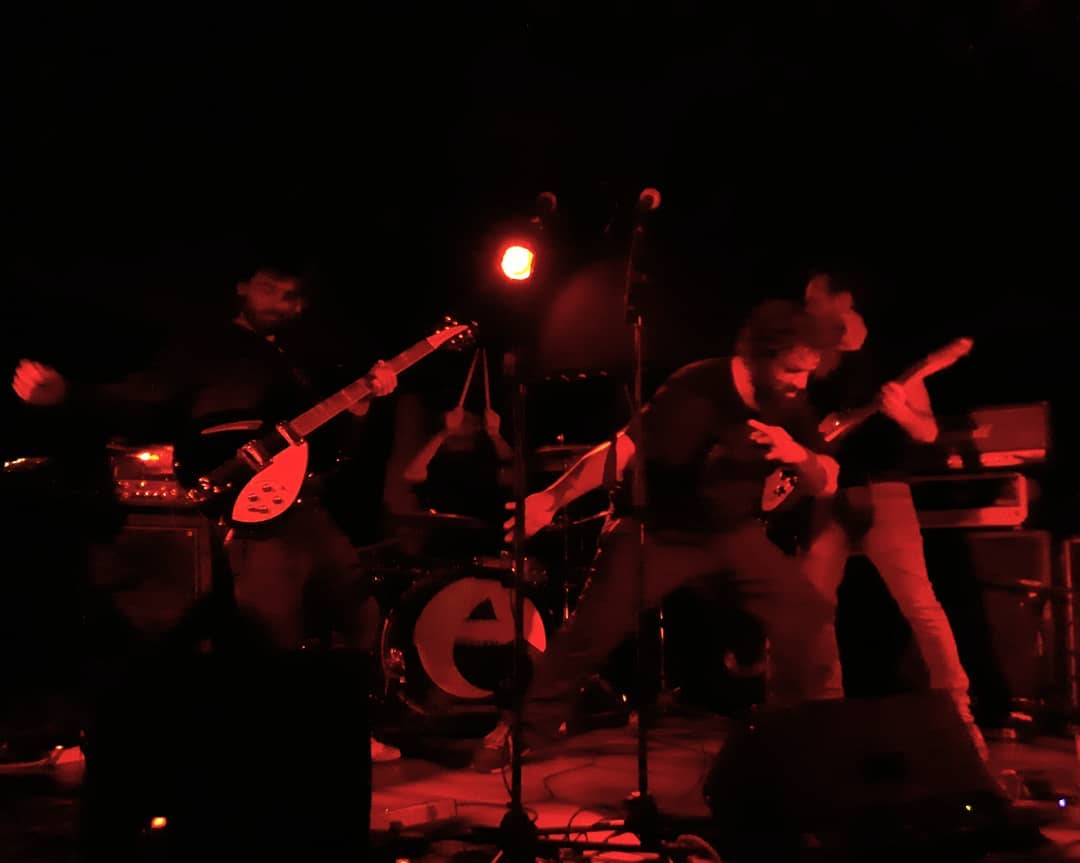
Con la sua reinterpretazione in chiave post-apocalittica del death metal progressivo più ricercato, Derivae mi aveva da subito conquistata. E quindi non vedevo l’ora di sentire i Nero di Marte in concerto per poter cogliere la bellezza della loro musica anche dal vivo. Sfumata la possibilità di sentirli insieme ai Gorguts in quel di Brescia, il concerto in programma al Freakout Club di Bologna era quindi per me una tappa obbligata!

Il Freakout è uno di quei piccoli locali molto intimi e dall’aspetto molto lo-fi (e veramente underground poiché si trova praticamente sotto un cavalcavia) che hanno un posto speciale nel mio cuore. Soprattutto quando, come in questo caso, hanno anche il merito di valorizzare le band sul palco facendole uscire al meglio, con suoni e potenza davvero notevoli.

Gli opener Juggernaut sono per me una grande rivelazione. Ammetto che li conoscevo più di nome che di fatto...inevitabile il "mea culpa" per questa lacuna, visto quanto la band romana mi ha colpito dal vivo. E non solo per la gran botta che usciva dalle casse, rendendo immediati e travolgenti i loro pezzi così articolati e complessi. O per i suoni di tutti gli strumenti, molto ricercati e ottimamente calibrati. È la loro musica ad avermi intrigata più di ogni altra cosa. Radici prog metal che si insinuano in trame post hardcore e si frammentano in ritmiche fra jazz e bossa nova. L’onda d’urto dello sludge. La potenza visiva, da colonna sonora, di un cinema italiano di altri tempi (vedi Elio Petri e certi poliziotteschi). Il tutto concentrato in soli 40 minuti di live. Può sembrare incredibile ed ingigantito, ma le impressioni e sensazioni suscitate dal loro concerto sono state davvero queste!

Si cambiano suoni, si aggiunge una voce dal profondo, e mi ritrovo immersa nei Nero di Marte. Anche loro tecnicamente ineccepibili, mi affascinano soprattutto per la mostruosa batteria – che è una vera e propria macchina da guerra di precisione chirurgica – e il cantato di Sean Worrell – sempre dilaniato, urlato e potente dalla prima all’ultima nota. Death metal che pesca anche nel mare del post hardcore e a tratti dello sludge unito ad una ricerca di sonorità e soluzioni che mi porta alla mente i Cynic e i Gorguts, il quartetto bolognese si conferma anche dal vivo una delle più interessanti realtà metal del panorama italiano (e non solo!). Dalle tonalità più trattenute e “introverse”, anche la nuova produzione – presentata per la prima volta in questo concerto – convince e lascia pregustare un nuovo album che sarà l’evoluzione dei due precedenti.

Abbinata particolare - e particolarmente riuscita - di due band italiane che fanno della ricerca e sperimentazione musicale e sonora la loro stella polare. 
[E.R.]
***
 

Nero di Marte + Juggernaut – 05.14.2016 – Freakout Club (Bologna)

With its post-apocalyptic reinterpretation of the most peculiar progressive death metal, Derivae got a place in my heart from the very first listening. So I could not wait to attend to a Nero di Marte concert, to seize the beauty of their music in a live show. Lost the chance to listen to them with Gorguts in Brescia, their show at the Freakout Club in Bologna became compulsory to me! 

Freakout is one of those small venues with a lo-fi and very cozy appearance (and really underground, being almost underneath an overpass) that have got a special appeal to me. Especially when they highlight the value of the bands on stage thanks to outstanding sounds and impact. 

Opener Juggernaut are a great revelation. I have to admit that I knew their name more than their music…so I also have to admit that I blamed my self for this lack! The band from Roma really impressed me a lot. Not only for the incredible energy flowing out of the amps, making their complex songs immediate and overwhelming. Not only for the sounds of all the instruments, extremely refined and wonderfully balanced. What fascinates me above any other thing is their music. Prog metal roots insinuate themselves into post hardcore weaves and get fragmented into jazz and bossa nova rhythms. The shock wave of sludge. The soundtrack visual taste of the Italian cinema of some decades ago (see Elio Petri and a certain “poliziottesco”). The whole in only 40 minutes. It may seems incredible or exaggerated, yet these are the real impressions and feelings their concert aroused in me.
   
Sounds change, there is a voice from the depths of somewhere, and I find myself immersed in Nero di Marte. Technically flawless, they fascinate me especially for the amazing drums – a war machine with surgical precision – and Sean Worrel vocals – always wracked, screamed and extremely powerful from the first to the last note. Death metal that fishes into the sea of post hardcore and – at times – of sludge, combined with a research of sounds and musical solutions that reminds me of Cynic and Gorguts, the live of the quartet from Bologna confirms them as one of the most interesting Italian (and not only!) metal bands. With more “restrained” and introverted tones, even the new stuff – presented for the first time in this concert – hits the target and lets foretaste a new album which could be the evolution of the two forerunners.

Peculiar – and particularly successful – union of two Italian bands that have their North Star in musical and sound research and experimentation. 
[E.R.]

martedì 19 aprile 2016

Elder - Lore


Elder - Lore
(Stickman Records, 2015)

E’ possibile far convivere in un unico panorama intricate foreste e possenti montagne? Oceani in movimento e immobili deserti? Dopo il successo del Red Album dei Baroness e di Crack the Skye dei Mastodon non sembra più impossibile abbattere le distanze tra il groove polveroso dello stoner e le complesse architetture progressive. Il retroterra psichedelico che accomuna i due universi è il ponte scelto dagli Elder per passare dall’uno all’altro. Nei 5 tortuosi brani di Lore gli Elder non danno vita ad alcuna imprevedibile reazione chimica, riescono però a rendere fluido il viaggio del loro fiume musicale attraverso ambienti disparati, con un rock energico e trascinante, ma al tempo stesso cerebrale e fantasioso, che li avvicina agli italiani L’Ira del Baccano. Ci sono le rapide vorticose dei riff e gli spruzzi incontrollabili degli assoli settantiani, così come le possenti correnti con le quali i brani sono finemente costruiti per sostenere la melodia senza affogarla. Il fiume non sfocia mai esplicitamente nella grandiosità e nell’epicità dell’oceano progressive, ma neanche guarda con distacco le sue atmosfere maestose e romantiche, spingendosi così controcorrente rispetto agli standard del “rock sudato”. La band di Boston si tuffa in profondità nel punto di congiunzione dei due mari, riuscendo a non annegare negli eccessi insiti nell’impresa. Tornando a riva il trio riporta a galla dalle profondità degli abissi un piccolo tesoro: un disco tra i più appassionati e appassionanti ascoltati nell'anno appena trascorso.
[R.T.]
***

Elder - Lore
(Stickman Records, 2015)

Is it possible to bring mazy forests and mighty mountains together in a single scenery? Oceans in movement together with motionless deserts? After the success of Red Album by Baroness and Crack the Skye by Mastodon, to overcome the distance between the dusty groove of stoner rock and the complicated architectures of progressive rock does not seem impossible anymore. Connecting the two universes, the psychedelic background is the bridge that Elder go through to move from the one to the other. In the five Lore tortuous tracks they do not realize any unpredictable chemical reaction, yet they are able to make really fluid the trip of their musical river through different territories, with an enthralling - yet at the same time brighty and imaginative - rock, which makes them close to the Italian L'Ira del Baccano. There are the whirling rapids of riffs and the uncontrollable splashes of “seventies style” solos, as well as the strong currents with whom the songs are finely built to sustain the melody without let it drown. The river never flows explicitly in the grandeur and epic of the progressive rock ocean, neither it looks with aloofness its majestic and romantic atmospheres, in this way going against the standards of the "sweaty rock”. The band from Boston dives deeply into the junction point of the two seas, without drowning in the intrinsic excesses of this kind of venture. Swimming back towards the shore they bring to light from the depths of the abysses a small treasure: one of the most passionate and exciting albums of the last year. 
[R.T.]

martedì 16 febbraio 2016

O.R.k. – 12.02.2016 – The Cage Theatre (Livorno)


O.R.k. – 12.02.2016 – The Cage Theatre (Livorno)

Il supergruppo è un’arma a doppio taglio: da una parte incuriosisce per i nomi coinvolti, dall’altra genera delle aspettative spesso difficili da soddisfare. Questo è proprio quello che accade con la musica degli O.R.k. e il loro concerto al The Cage.

Il progetto di metal alternativo di ispirazione progressiva ideato da Lorenzo Esposito Fornasari (aka LEF, polistrumentista e cantante che vanta collaborazioni con i nomi più in vista del panorama sperimentale) e  Carmelo Pipitone (chitarrista dei Marta sui Tubi), si avvale del supporto di Colin Edwin dei Porcupine Tree al basso e Pat Mastellotto dei King Crimson alla batteria. Il risultato finale non raggiunge però la somma delle singole parti. In poco più di un’ora la band genera un vorticoso metal progressivo che non riesce a decollare nonostante la grandiosa capacità tecnica dei musicisti coinvolti. Di idee ottime ce ne sono a bizzeffe, e vedere questi musicisti destreggiarsi con lo strumento è comunque un piacere, ma quello che non convince sono proprio le canzoni, che alla fine risultano poco incisive e fluide. Attraversando attimi di delirio, esplosioni di trascinante potenza si alternano a momenti riflessivi, ma l’impressione è che non ci sia un disegno complessivo - e neanche un caos tanto disorientante da lasciare comunque una sensazione forte. La voce di LEF è assolutamente magistrale, con una profondità, una potenza e una versatilità che hanno pochi pari in Italia, ma l’atteggiamento da star, la mancanza di autoironia e la convinzione di essere un nuovo Mike Patton non lo rendono certo simpatico. Se Pipitone sulla carta potrebbe sembrare il nome meno appariscente, è invece proprio la sua chitarra estremamente rock a mantenere sulla terra una musica che spesso si perde e si sfilaccia. Un vero peccato: perché se questa band riuscisse a mirare un obiettivo, non ci sono dubbi che lo centrerebbe in pieno.
[R.T.]
***

O.R.k. – 02.12.2016 – The Cage Theatre (Livorno)

The all-stars band is a double-edged weapon: if it excites curiosity because of the musicians involved in the project, it also generates expectations often difficult to satisfy. This is what happens with O.R.k. music and their gig at The Cage.

The progressive alternative metal project conceived by Lorenzo Esposito Fornasari (aka LEF, multi-instrumentalist and singer with a million of collaborations with the most important musicians in experimental circle) and Carmelo Pipitone (guitar player of Marta sui Tubi) relies on the support of Colin Edwin of Porcupine Tree at the bass guitar and Pat Mastellotto of King Crimson at the drums. Yet the final result does not reach the sum of the single parts. In just over an hour the band generates a whirling progressive metal that is not able to take off despite the great technical capability of the single musicians. There are a lot of excellent ideas, and it is a real pleasure to see these musicians juggling with their instrument, yet what is unconvincing are songs themselves, resulting a bit ineffective and not too fluid. Crossing istants of delirium, explosions of enthralling energy alternate with reflexive moments: yet the impression is that there is no overall design - neither a chaos so confusing to convey a strong feeling, anyway. LEF voice is absolutely masterly, with such a depth, a power and a versatility that it has few equals in Italy. Yet the star-like attitude, the lack of self-irony and the complacency in the belief of being a sort of new Mike Patton do not make him really pleasant. One should think of Pipitone as the less striking name: on the contrary, his extremely rock guitar maintains on the Earth a music often raveling and losing itself. What a pity: because if this band would be able to aim for a target, there is no doubt it would hit it.
[R.T.]


venerdì 12 febbraio 2016

Coroner + Acid Death + Sofisticator - 07.02.2016 - The Cage Theatre (Livorno)


Coroner + Acid Death + Sofisticator - 07.02.2016 -  The Cage Theatre (Livorno)

Corso base in 3 lezioni sulle evoluzioni del thrash metal, da sound grezzo e festaiolo per nerd brufolosi e ubriachi a musica strutturalmente complessa e concettualmente fantascientifica/distopica per nerd brufolosi fissati con il Commodore 64 e i b-movie post apocalittici.
1^ lezione: Voivod (Estragon, Bologna – 17/11/2015)
2^ lezione: Vektor (Exenzia, Prato - 27/11/2015)
3^ lezione: Coroner (The Cage Theatre, Livorno – 07/02/2016)

La serata del Cage viene aperta da un classico assalto thrash metal old school, operato dai Sofisticator. Sporchi e veloci come il genere richiede, la band scioglie i muscoli del collo a tutti i metallari capelloni presenti. Pur senza apportare particolari novità al genere, il gruppo fiorentino (nel quale militano alcuni membri dei Sulphur) convince e diverte. Consigliatissimi agli amanti di queste sonorità.

Seguono gli Acid Death, che fin dal primo accordo saturano i timpani dei presenti con suoni troppo compressi e con distorsioni troppo digitali per il thrash/death da loro proposto. Meglio quando si spostano su composizioni futuribili e post industriali alla Meshuggah/Fear Factory, dove, pur senza offrire idee particolarmente interessanti, almeno non danneggiano le canzoni.

Inizia poi la lezione vera e propria. I Coroner sono tra le massime autorità in materia, e lo dimostrano con un concerto in cui l'impatto e l'energia non sono mai soffocati dalla complessità tecnica dei brani. Come narra il luogo comune sugli svizzeri, anche i Coroner sono precisissimi, ma ancor di più mostrano potenza, dinamismo e infinita fantasia. A veloci sfuriate alternano mid tempo carichi di groove, dal sapore meccanico e industriale, collegando i diversi passaggi con arzigogolati, ma sempre convolgenti, labirinti ritmici. Gli assoli di Tommy T. Baron e la mentalità esplicitamente progressiva e sperimentatrice delle melodie, dimostrano quanto questa band sia stata fondamentale nel piegare il thrash metal in forme inedite, che dalla seconda metà degli anni 90 in poi, diventeranno quasi usuali grazie a band come i Meshuggah. Il fatto che in certi frangenti sprigionino un'incontenibile energia assimilabile a quella degli Helmet, band neanche lontanamente assimilabile al classico ambiente metal, la dice lunga su quanto questi svizzeri abbiano abbattuto i confini del genere. Riunitisi nel 2010, la band non ha ancora pubblicato il seguito di Grin (1993) e si è per ora "limitata" a concerti memorabili, come quello del Cage. Visti i risultati, la speranza per un nuovo lavoro diventa quasi un'esigenza.

Speriamo che questo corso sul thrash metal progressivo e fantascientifico preveda un secondo modulo (magari con una bella lezione tenuta dai Meshuggah) dello stesso livello del primo!
[R.T.]
*** 

Coroner + Acid Death + Sofisticator - 02.07.2016 -  The Cage Theatre (Livorno)

Basic course in 3 lessons on the evolution of thrash metal, from raw, funny sound for pimply, drunk nerds to dystopian, sci-fi, complex music for pimply nerds addicted to Commodore-64 and post apocalyptic b-movies.
Lesson #1: Voivod (Estragon, Bologna – 11/17/2015)
Lesson #2: Vektor (Exenzia, Prato - 11/27/2015)
Lesson #3: Coroner (The Cage Theatre, Livorno – 02/07/2016)

The evening at The Cage is opened by Sofisticator and their old school thrash metal assault. Filthy and fast as the genre needs, their songs introduce the headbanging ritual for all the longhaired metalheads. Even though they do not revolutionize the genre, the band from Firenze (featuring some members of Sulphur) impresses and entertains. Heartly reccomended to lovers of these sounds.

Then Acid Death – and from their very first chord they saturate the eardrums with too compressed sounds and too digital distorsions for their thrash/death setlist. Things go better when they play their Meshuggah/Fear Factory-like futuristic, post-industrial songs: nothing new on the horizon, yet at least songs are non damaged by poor sounds.

Finally the actual lesson. Coroner are one of the leading authorities in this field, and they offer clear evidence of this with a great show in which impact and energy are never choked by the technical complexity of the songs. In full respect of the commonplace on Swiss, Coroner are really extremely precise: yet above all they show power, dynamism and infinite creativity. Fast oubursts, mechanical/industrial groovy mid tempo, convoluted – yet enthrolling – rhythmic mazes. Tommy T. Baron solos and the prog, experimetal attitude of melodies are evidence of how influential Coroner were in giving new shapes to thrash metal (new shapes that have become almost usual from the second half of 90s, thanks to bands such as Meshuggah). The uncontainable, Helmet-like energy of some passages tells us how far they went from the boundaries of the genre. After their reunion in 2010 they have not yet released the sequel of Grin (1993) and they are “simply” playing memorable concerts, like this one at The Cage. Considering the high quality of their music and performance, the hope for a new album becomes almost a need.

I really hope that this mini-course on prog, sci-fi thrash metal will be followed by a second level of the same great quality of the first (hopefully with a beautiful lesson by Meshuggah)!
[R.T.]